
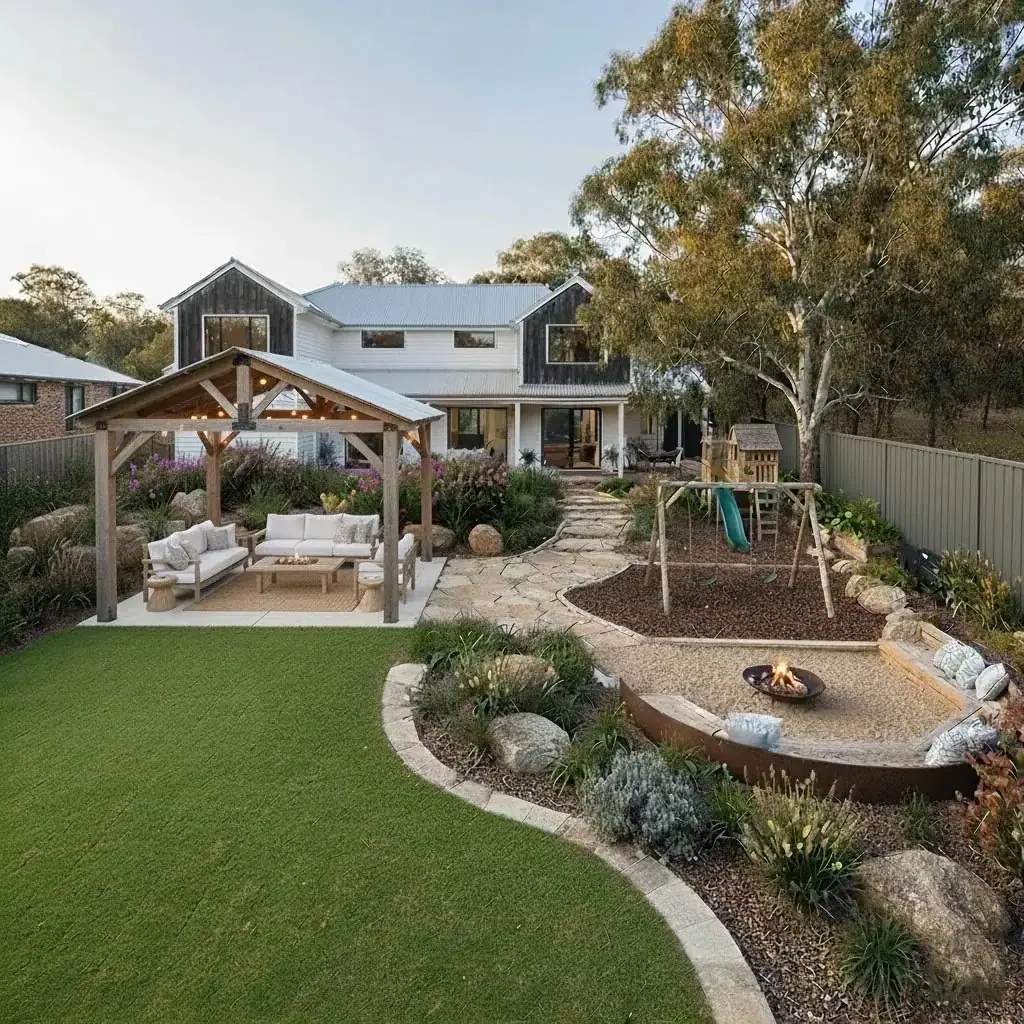
The mistake most people make designing a Queensland garden is assuming a tropical look means tropical plants. The two are not the same thing, and the gap between them is where good design lives.
We’re often asked what makes a Queensland landscape different. The honest answer is: nearly everything. The climate is more dramatic than the brochures suggest. Long humid summers, occasional brutal cold snaps in the southern half of the state, sudden tropical downpours, and in coastal areas a constant low dose of salt in the air. Soils vary wildly within a single suburb. And the angle of the sun in summer is high and savage.
Designing for those conditions, not despite them, is what separates a garden that thrives from one that limps along on weekly intervention.
Start with shade and water, not plants
Most clients arrive at our first consult with a plant wishlist. We always start a conversation about light and water instead. Every site has a hydrology: where rain lands, where it pools, where it drains, and where it never reaches. Map that first, and the planting plan almost designs itself.
We use a simple framework: hot/dry, hot/wet, shaded/dry and shaded/wet zones. Each gets a different palette. The mistake is putting an agave next to a fern because they both look architectural. They want completely different lives.
Hard landscape sets the rhythm
In Queensland, a garden gets used differently to one in a cooler climate. Outdoor rooms are the main living space for nine months of the year. That changes everything about how we think about paving, shade structures, and the transitions between house and garden.
A few things we specify almost without thinking now:
- Pale-toned, textured paving. Never white, never glossy. Heat reflection and glare are real, and a $200 sample today saves a $20,000 regret.
- Generous overhangs or pergola shade over any seating zone that gets western sun.
- Drainage built into hardscape, not bolted on after. Slot drains, permeable joints, and falls calculated for tropical downpours, not a Sydney drizzle.
- Materials that age: patinated copper, weathered timber, honed stone. The Queensland sun will weather everything; the question is whether it weathers gracefully.
Planting palettes that earn their keep
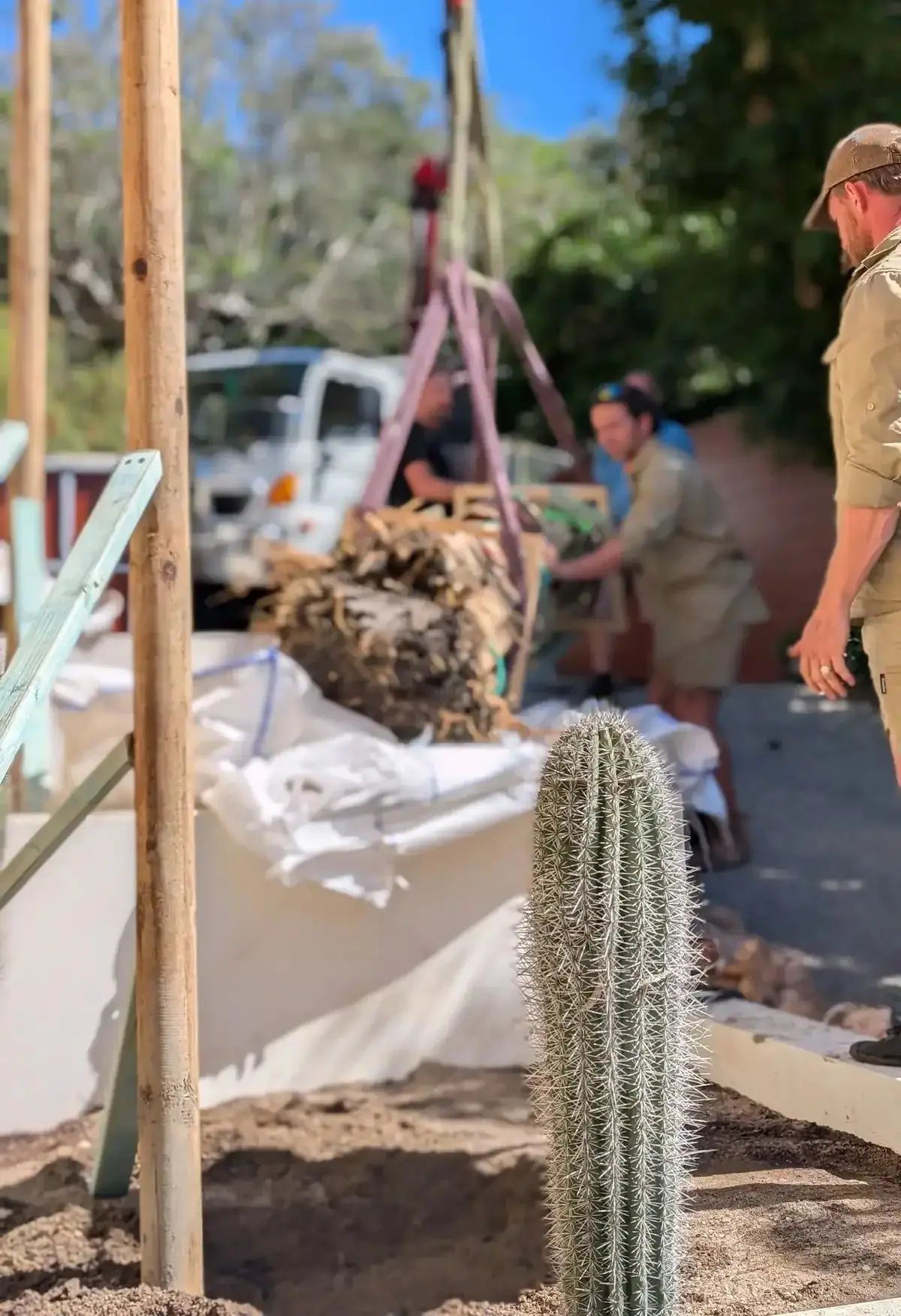
When we get to plant selection, we lean heavily on three groups: drought-tolerant arids (a legacy from our work at Cactus Culture), Australian natives, and a small set of tough subtropical exotics that have proved themselves over decades.
The goal is a garden that looks intentional all year, not just in spring. Texture and structure carry far more weight than flower in the long view. A frangipani flowers for six weeks. A well-placed dragon tree carries the garden for fifty.
We’ll write a follow-up piece soon with our actual plant list: the twelve species we end up specifying on most Brisbane projects, with notes on placement, spacing, and irrigation. If you’d like that in your inbox, the newsletter signup at the bottom of this page is the easiest way to catch it.
The long view
Climate-resilient design is a discipline more than a style. The gardens it produces look different to a magazine spread, and they’re still standing in year fifteen with less water, less work, and fewer dead plants.
That’s the work we want our name on. It’s the thinking we bring to every landscape design we take on, from the very first sketch.